

One of the six disciplines for a climate-concerned consumer is to drive an electric vehicle or EV (or don’t drive - but not driving may not be a practical choice for you.) My April 1, 2026 post “The Car I Choose Matters” explores the challenges and benefits of changing to an EV, and I recommend going back to this earlier post if you are currently driving a car powered by gasoline or diesel.
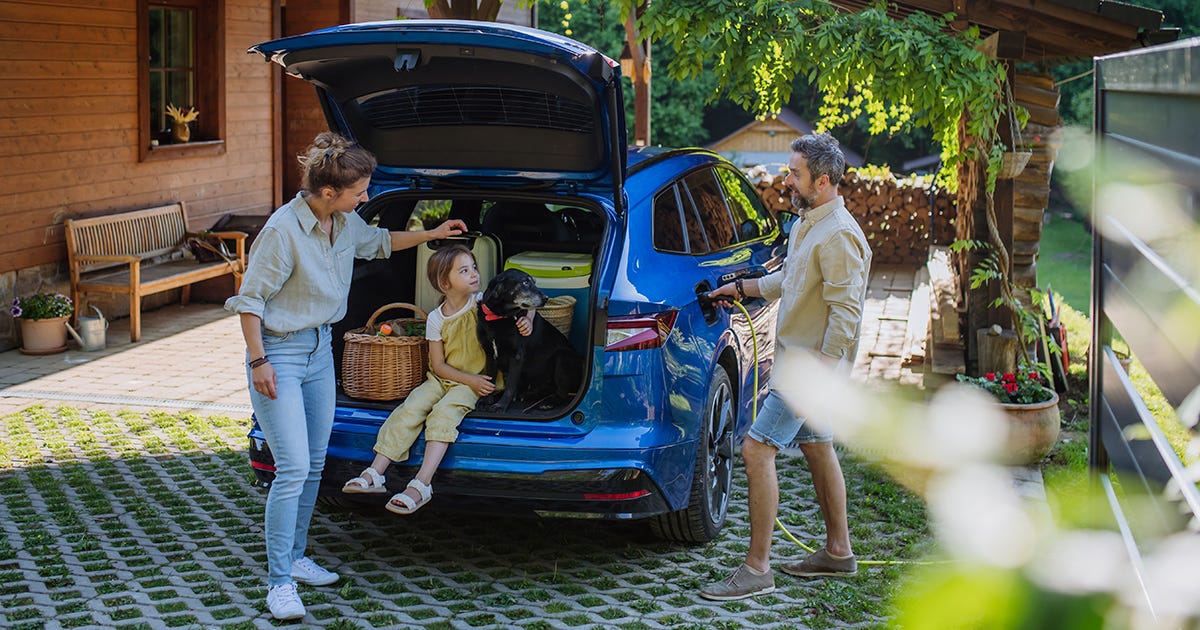
Let’s check in on how we are doing individually and in the United States on shifting our driving toward lower emission EVs - first as individuals aligning our actions with our values and second collectively in the United States..
How am I doing individually?
If you already drive an EV, thanks. Please share your experience with your EV in the comments.
If you are not yet driving an EV, I have a request.
Make a plan to purchase an EV for your next vehicle.
A first step in this plan might be to get more information. Here are a couple related suggestions directly from my April 1 post:
Ask friends how they like their EV and what they’d recommend; ask friends about any concerns you have
Test drive a few EVs, either a friend’s or through a dealership
Explore charging options where you live; if you own a home, examine the cost of upgrading electric infrastructure in your garage.
An EV can have a higher initial cost, and if you own a home you might also want to invest in a wiring upgrade in your garage for charging. But take the time to research the Total Cost of Ownership (TCO) for an EV compared to an internal combustion engine. It costs less to drive an EV a mile than to drive an internal combustion engine vehicle - both in fuel costs and in maintenance. And over the years, the total cost to own an EV is lower than owning an internal combustion engine.
Please share in the comments the most challenging aspects as you evaluate if your next vehicle will be an EV.
How is the United States shifting toward EVs?
On October 19, 2026, the Energy Information Agency (part of the US Department of Energy) published their quarterly update on new light-duty vehicle sales in the United States. For context, light-duty vehicles include passenger cars, sport utility vehicles (SUVs), minivans, passenger vans, and light-duty pickup trucks like the Ford F-150 and the Chevrolet Silverado 1500. (These statistics do not include the F-250 or F-350 or Silverado 2500 or 3500 which are classified as heavy-duty trucks.)
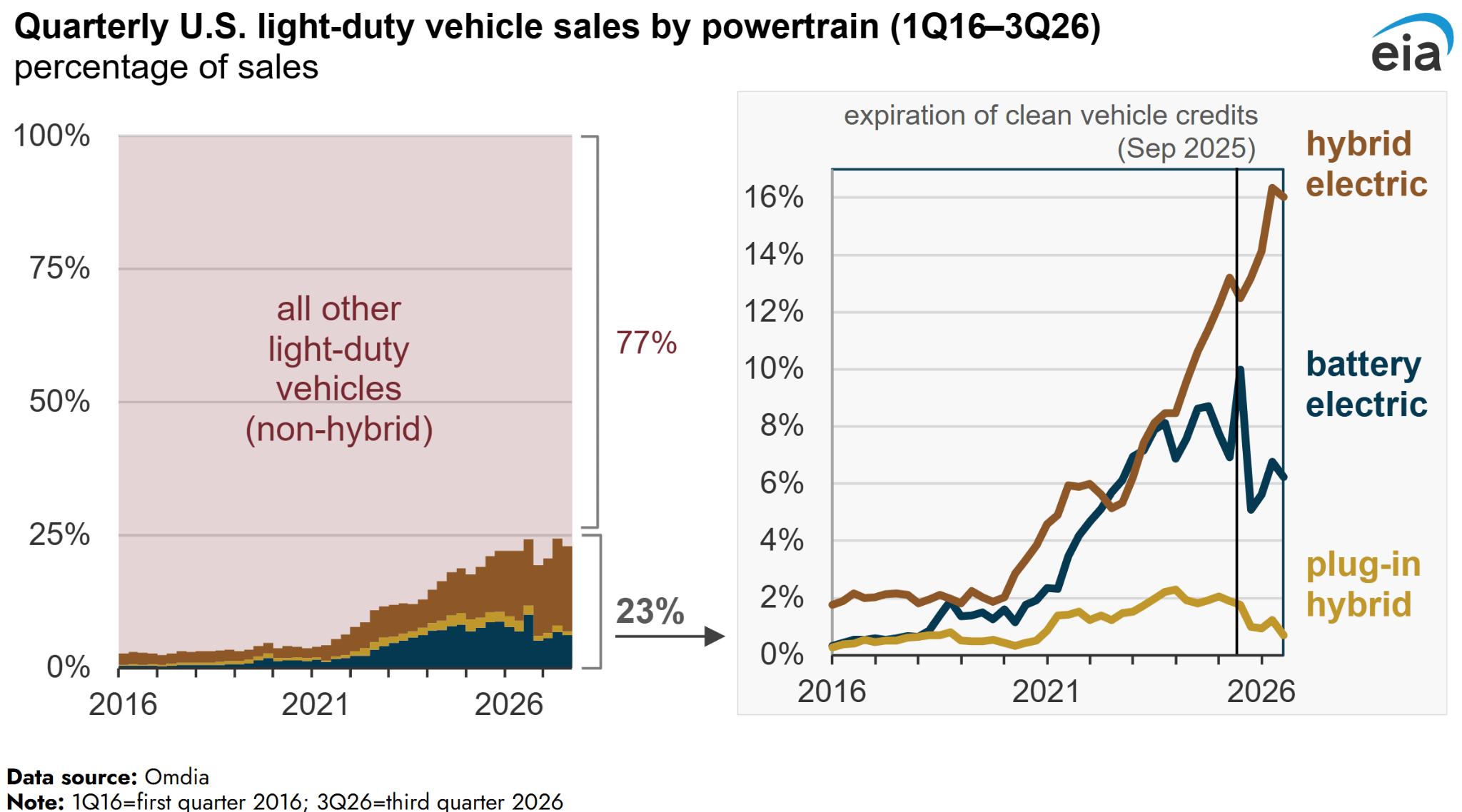
For the last three quarters, only about 6% of new vehicles sold in the United States were EVs! Another 1% were plug-in hybrids. And over 90% of new vehicles rely strictly on gasoline or diesel for power (over 9 out of 10 new vehicles). And most of these gas-powered vehicles will remain on the road for over a decade. About 16% of these new vehicles have hybrid powertrains which are much more efficient, but this still leaves over three-quarters of the new vehicles as old fashioned internal combustion engines.
Adoption of EVs (battery electric) peaked in the United States in 2023. This is significantly different from the trajectory in many developed and developing economies. In China, around half, or one of every two new vehicle sales are EVs, and in the European Union about one in every five new vehicles are electric.
Why has EV adoption stalled in the United States?
Fundamentally, I think there are two reasons.
First, automobile manufacturers currently make more money selling an internal combustion engine vehicle than selling an EV. So they advertise internal combustion engine vehicles, they lobby for policies to support internal combustion engines, and they produce more of them. And the profit from pick-up trucks is significantly higher than sedans, compact cars or EVs.
Second, American consumers simply buy internal combustion engine vehicles at a higher rate than they buy EVs. Sounds obvious, but our individual choices of what vehicles we buy (new and used) supports a market dominated by out-dated internal combustion engines. It is the individual decisions regarding which vehicle to buy that truly shapes which vehicles the auto manufacturers produce. If more of us choose to buy internal combustion pickup trucks and SUVs, automobile manufacturers will produce more. If we choose to buy EVs, automobile manufacturers will shift to produce more EVs.
And, in 2026, American consumers are collectively voting for internal combustion engines through their individual choices as they buy their vehicles.
This extends to the used market also, as the resale value of a vehicle is a real consideration for many people when they look at a car purchase. A strong demand for used EVs supports the sale of new EVs.
Please comment on your personal progress. How are you, personally, doing at exploring or buying an EV? What challenges are you confronting? What successes?
Jim
I've driven 26,000 miles with my Equinox EV since I bought it in March 2025. It cost me just $15 to install a level 2 charger in my garage because it already had a 220-volt circuit for a kiln. The map on the dash shows all of the charging stations anywhere I go, how many chargers at each station and how many are not being used, and is amazingly accurate in estimating how much charge in my vehicle will remain upon arrival at those charging stations or any destination, if I drive at the speed limit. I never suffer range anxiety because I don't drive to places that lack charging (there are still charging deserts far from interstate freeways where population density is low). My biggest gripe is the requirement of some charging stations to use an app rather than simply a credit card to charge; it's an unnecessary nuisance. Charging at home costs far less than public charging, so I always charge up before leaving home on a long trip.
I tell people who are thinking about adoption, try renting an EV and taking it on a road trip. Hertz, Enterprise, or even Turo. Go for a drive through the Blue Ridge mountains or along the California coast. Of course, I tell them to read my guidebook first so they know what they’re doing, but then test it out for themselves before making any decisions. Too many people hold themselves back based on a feeling. They can’t like what they don’t know. I knew nothing 2 yrs ago, then went on a 4 hr drive in a Tesla with my brother and that changed everything.