

As a kid, when we had beef roast for a big meal, the leftover meat would go in our refrigerator. I wasn’t supposed to eat it for a snack. My dad, however, would cut off a few slices and share them with me and we’d eat the slices cold. As an adult, I enjoyed the taste of cold beef as much as a steak right off the grill. And just imagining the taste connects me with comforting memories of my dad who passed away almost 30 years ago.
I had the good fortune to live in Freiburg, Germany for a year when I was 5 years old. My family would frequently get a loaf of fresh bread and a block of cheese and hike up into the hills around Freiburg for a picnic lunch centered around cheese. I continued this habit into my adult life, buying multiple blocks of cheese each week, and often structuring lunch around cheese and bread.
My step mom had a favorite brand of butter pecan ice cream that was sold at a small store 4 miles from our house. After I got my drivers license, I could always use the car if I was willing to drive to that market and buy a quart of butter pecan ice cream, provided I got it home while it was still hard.
And hamburgers were a staple. On the grill. With lots of ketchup.
I never imagined I would stop eating beef, milk and cheese; but I have.
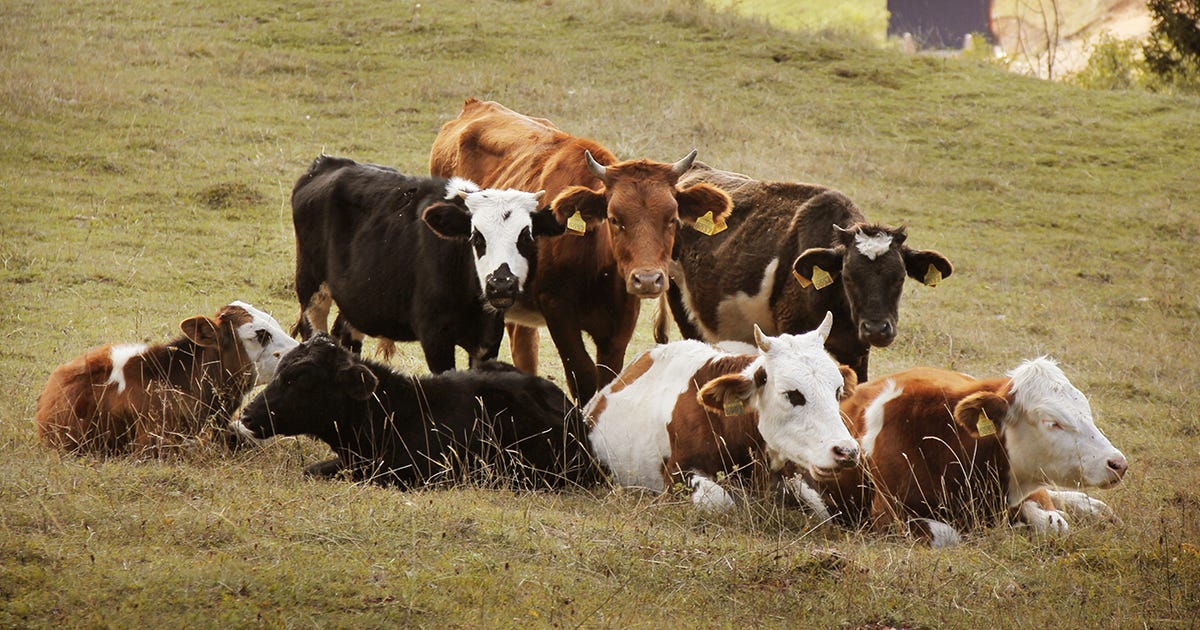
Eating no beef and less meat does significantly reduces the greenhouse gas emissions I cause by my diet. Cows (beef) and sheep (lamb) are ruminants, a class of animals that digests food differently than we do. When a ruminant swallows, the food initially goes into an organ called a rumen where bacteria start to break down the roughage and in the process release methane (CH4) that the cows (or sheep) burp back into the air. Methane is a greenhouse gas that is over 80 times more potent at trapping heat than carbon dioxide over a 20-year time frame. While eating less meat and more vegetable protein is an important step in reducing our greenhouse gas emissions, simply eating other sources of meat instead of beef also causes significant reductions in greenhouse gas emissions. So, if immediately going to a complete vegetarian diet doesn’t sound practical, try a simpler step initially: avoiding all beef in your diet. Previously, I explored the emissions reductions from eliminating beef and from shifting to a full vegetarian diet.
Do I miss beef and dairy? Not as much as I thought I would. And only when I let my mind fixate on them - like while writing this post. I also previously provided some insights on how to change a habit in order to change what I eat. But let’s get a bit more granular on changes I’ve made.
Beef
Hamburgers are probably the most ubiquitous signature product that were a staple throughout my life. But there are so many good alternatives. A couple decades ago Wendy’s Spicy Chicken Sandwich had displaced a hamburger as my favorite fast-food sandwich, and a chicken sandwich is a lower emission meat sandwich.
For lunch now, I prefer alternatives to meat on my sandwiches. My standard lunch sandwich starts with spicy hummus (like Ithaca Jalapeno Lime Hummus, or 365 brand Jalapeno Hummus, or Sabra Supremely Spicy Hummus). Grate a carrot over the hummus and add some Cholula hot sauce in the carrot (I like the chili-lime variety). Add other stuff as available like sliced tomatoes, avocado, maybe some Wickles Wicked Pickle Chips. Another standard sandwich is a variation of a peanut butter sandwich where I add chipotle peppers or hot sauce and a thick slice of apple - or I grill the peanut butter sandwich with hot sauce in with the peanut butter and just a bit of added salt added on the grill.
Milk
I never thought I would shift away from milk on my cereal and in my coffee. But I’ve found alternatives that I find just as satisfying. I use low-sugar almond milk in my coffee and on my cereal. I was surprised at how easy this transition was. For me, unsweetened almond milk has a good consistency and taste - and the consistency is really important. I have found that I really don’t like oat milk, and I’m not that fond of soy milk. But nut milks are satisfying and an easy switch. If you try some of the milk alternatives, be willing to experiment a bit to find the product that fits your taste and palate. Don’t get discouraged if your first quart of oat milk seems thin and not appealing - just go on to the next alternative. Here’s an overview of the environmental impacts of different types of milk products.
Ice Cream
Better than the nut milks, So Delicious frozen cashew and almond milks are a satisfying treat that has replaced cow’s milk based ice cream in my house. I occasionally experiment with other brands, but keep returning to So Delicious as a standard. Though I might not be as deeply committed to this brand as my step mom was to her specific brand of butter pecan ice cream.
Cheese
I used to buy a few sticks of cheese each week. Another product I simply could not have imagined completely removing from my diet.
I typically don’t like “substitute” end-products for cheese. Instead of vegetarian alternatives that try to mimic cheese, I prefer alternate products: Like getting some hummus on crackers or a real sauce in place of melted cheese.
We’ve even have found a tasty vegetarian pizza without cheese from a local shop.
Butter
Butter was really rather easy to give up in our home. Sunflower oil and olive oil are good to cook with, and even to grill up a piece of bread if I want something like buttered toast. And there are substitutes for baking.
Not looking for perfection
I will occasionally eat some products from cows - occasional feta on a dish, cheese on a pizza, or some half-and-half in a cup of coffee when there’s no nut milk option available. I probably still eat some butter when I order an almond croissant at a coffee shop. I’m less about trying to be 100% pure and more about focusing on getting my emissions low across many actions while still enjoying life.
I give restaurants some latitude on using butter or some cheese in a menu item - I won’t pass up a good slice of bread or a cookie just because it might have some milk or butter baked into it.
But I’ll intentionally return to a restaurant that serves me food without products that come from cows.
Are there any foods you’ve dropped that you were surprised at how easy the change was once you started? Any foods you’ve just been unable to drop?
Good eating.
Jim
Jim, I’m glad you point out that purity is not the goal. If you reduce your beef intake by 50%, u you reduce your beef-based emissions by 50%. And if the US cut all its GHG emissions by 50%, we would be awesome.
We like the non-soy meat alternatives like Beyond Beef. A trick is to brown them enough to bring out the umami flavor.