

Air travel provides incredible access and convenience. And for many, air travel is deeply tied to a sense of freedom. But true freedom also includes the agency to align our actions with our values. For those of us concerned about the climate, flying less is one of the most powerful, immediate choices we can make.
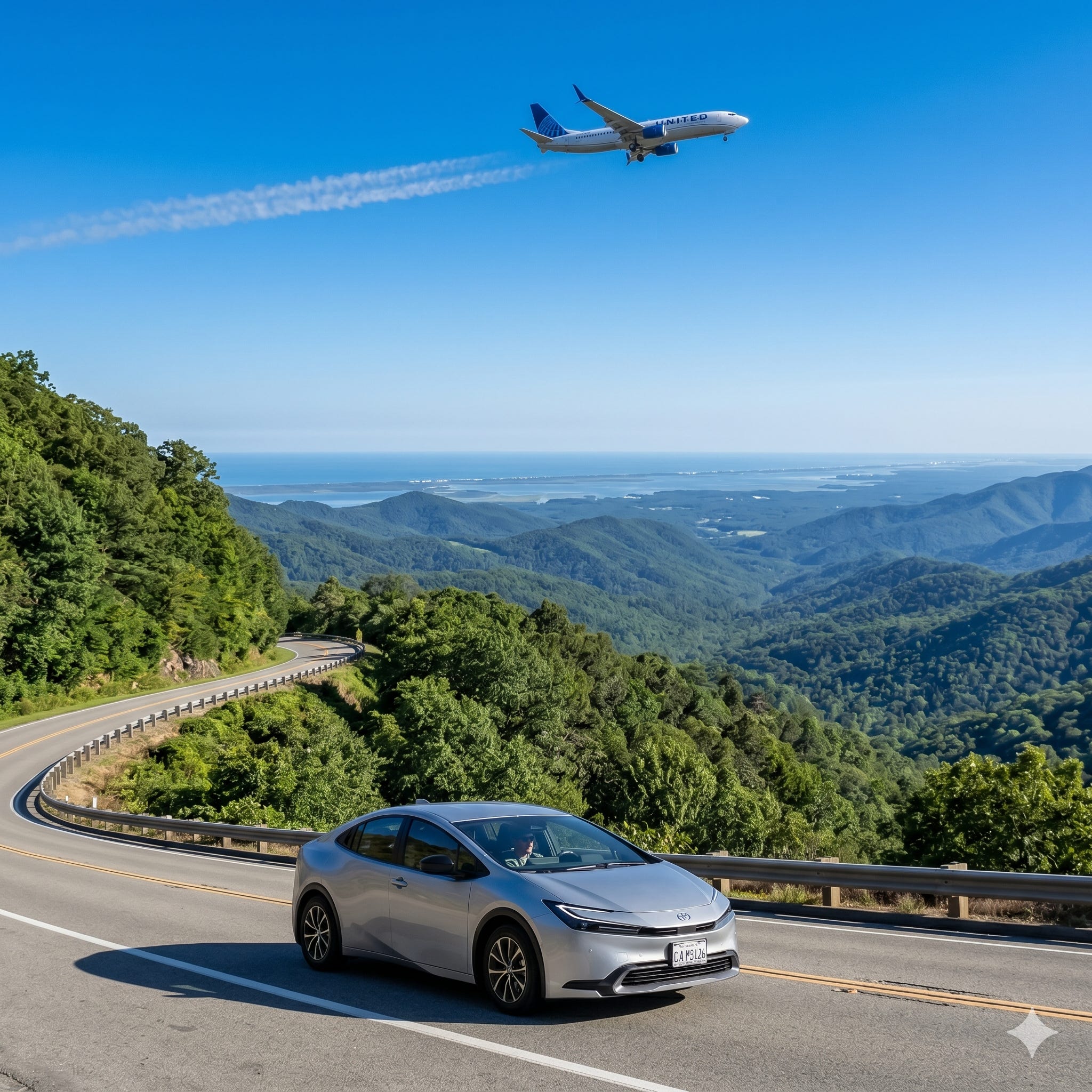
When people fly less, less jet fuel is burned
I have had friends tell me that if they don’t get on a plane for their air-travel based vacation, the plane will still fly anyway. But we know that when fewer people fly, the airlines adjust quickly so they are not flying empty air planes. Airlines shift flights to maximize their profit (or minimize their loss). Airlines lose money flying nearly empty planes, and they quickly act to avoid losses.
In 2020, our collective response to COVID provided a good test of the ability of airlines to adjust flights. During the first half of the year, passenger-miles dropped significantly. Here is the data from the Federal Reserve Economic Data (FRED) showing monthly passenger miles over the last 10 years:
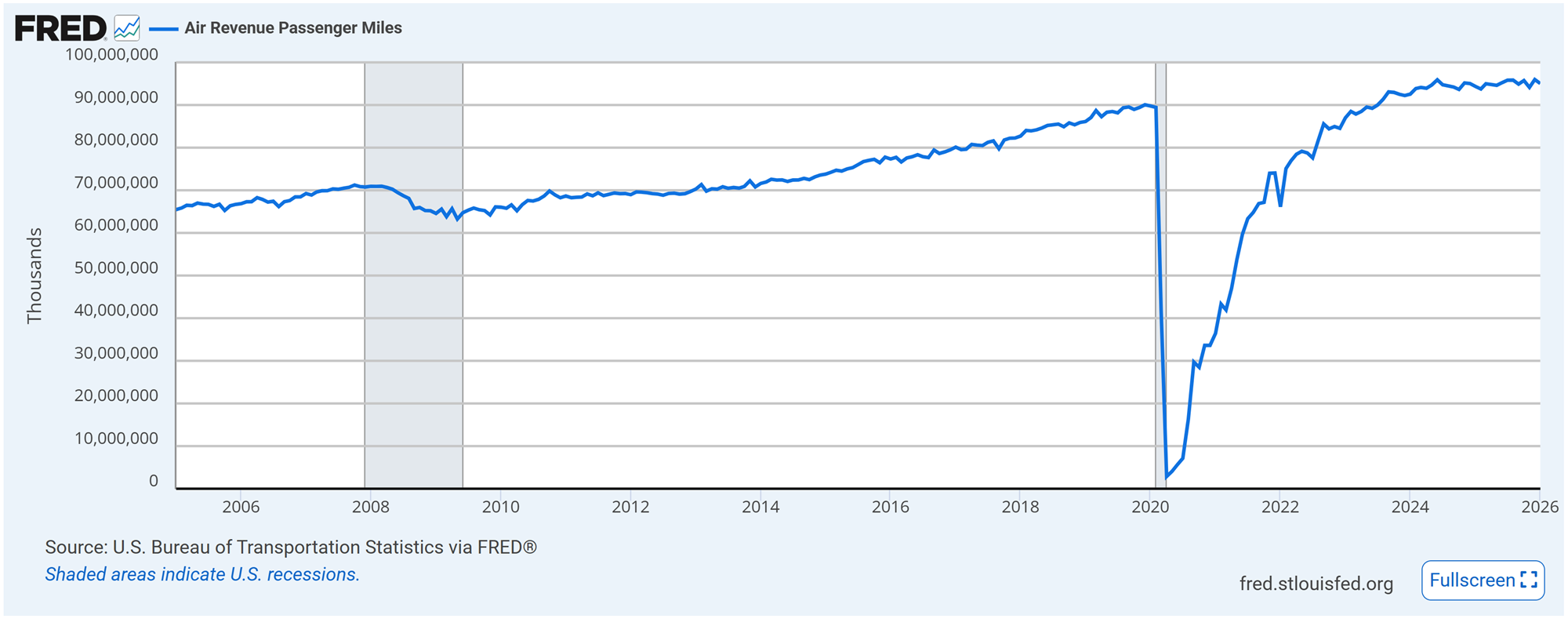
Notice the sharp drop in early 2020 followed by a recovery starting in 2020 and extending through 2023.
The Energy Information Agency of the US Department of Energy provides data on annual jet fuel consumption in the United States. The drop and gradual recovery in jet fuel use is easy to spot and matches the passenger-miles shift caused by COVID:
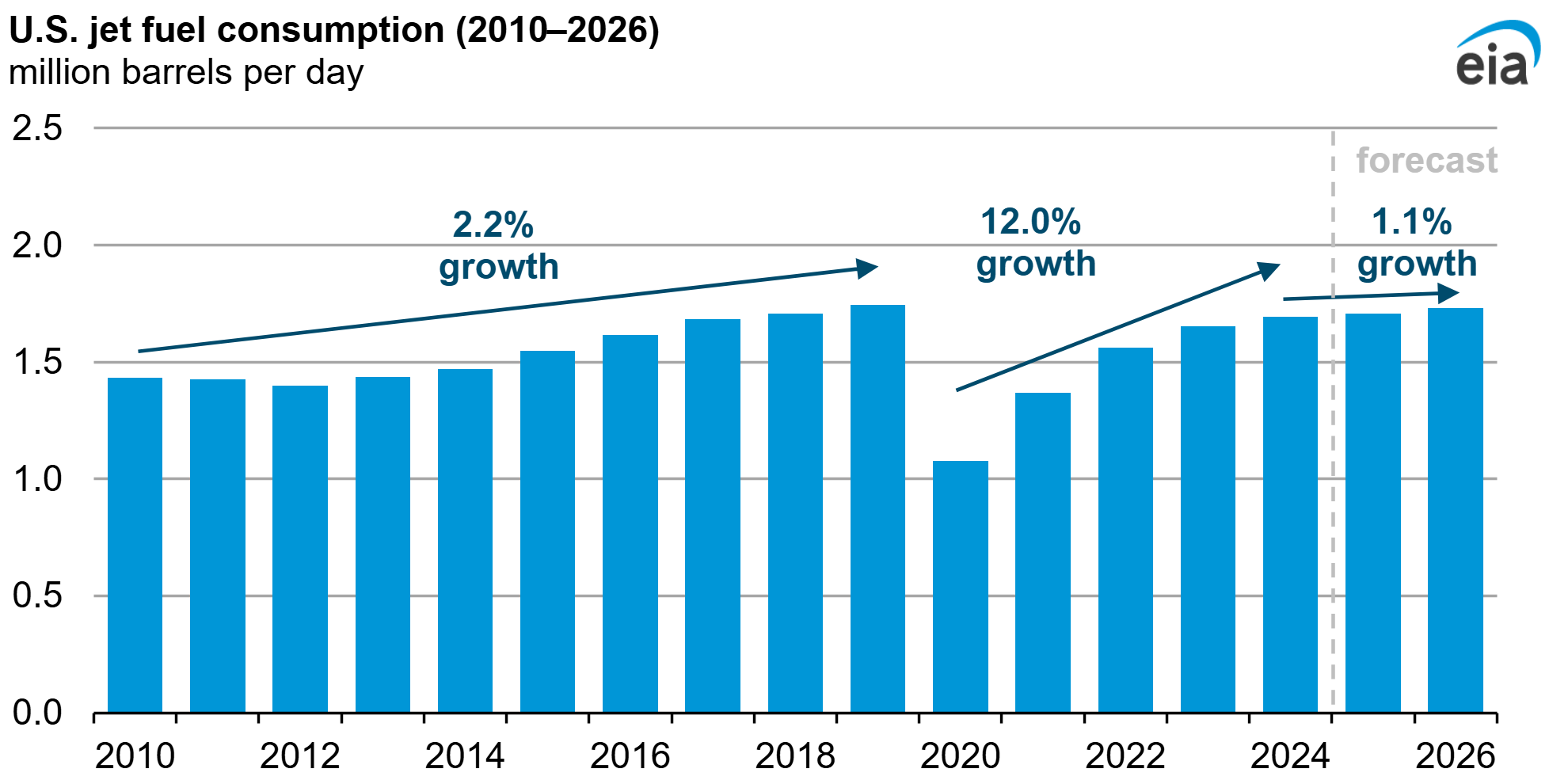
It’s rather clear: when people stop buying tickets for air travel, jet fuel use goes down and greenhouse gas emissions drop. As the old saying goes, it’s not rocket science; though it may be basic aviation economics.
Changing behaviors of people who fly is difficult
I am trying to persuade you to fly less. I don’t know if I’ll succeed, but past research suggests that I’ll probably fail. It is extremely difficult to change the behavior of people accustomed to the ease of getting on a plane to travel across a country or across an ocean. Beyond simply asking each of us to act responsibly and reduce our emissions by flying less, policy choices are also unlikely to shift behavior of frequent fliers.
Increasing prices does not seem to modify most flier’s behavior. Low cost airlines suffer when costs (and fares) go up, as reflected by the recent complete collapse of Spirit Airlines as jet fuel prices surged this spring (2026). But in the past the major airlines have not seen the same drop off. Regulatory policies like a carbon tax are not optimal for reducing emissions from air travel. It is estimated that emission taxes as high as $270 per ton of CO2 may only reduce air travel demand by 0.8%. Air travel is referred to as inelastic - a service where increasing costs do not drive large reductions in sales.
In reality, the best solution to reduce emissions from air travel involves policy changes AND personal behavior changes; and there are no policy changes that don’t also require changes in our personal choices.
I do believe that if you are reading @co2mmit, you are motivated to reduce your emissions. And that you are willing to explore the idea that a ton of CO2 emissions avoided by flying less is both significant and meaningful. With that belief, I’ll proceed to more concrete recommendations.
Find locations to vacation close to home.
Avoiding air travel for leisure frequently comes down to finding alternative destinations to look forward to visiting.
My dad grew up in Idaho, and as a kid, every three years, we’d load up a station wagon and travel from Michigan back to Idaho. Once in Idaho we would always, without exception, make our way into the Sawtooth National Forest and simply enjoy being up in the mountains - frequently at Redfish Lake. This was before air travel was as common, so at the end, we’d load back into the station wagon for the drive back to Michigan.
As a parent, I enjoyed getting my kids into the Rocky Mountains and back to the Sawtooth National Recreation Area. We’d fly into Salt Lake City or Boise and drive the rest of the way. And I continued to enjoy this trip after my kids were older.
Now, I am adjusting to the idea that I may never return to the mountains of Idaho.
If I hang on that thought, it is easy to find justifications for one more flight into Boise and an enjoyable drive up into Ketchum.
But I have alternatives. I now live in Asheville, North Carolina, and I can find and explore areas around me that are also beautiful and relaxing. I can even create some traditions of my own. One example of a new tradition: we spend a few days for our anniversary birding and hiking near Grandfather Mountain in North Carolina. This is now an annual trip we look forward to—a new tradition. And it is a 100-mile trip we can make in our EV. As a bonus, while driving I can pack the car with more camera gear for birding as opposed to worrying about my camera stuffed in an overhead bin on an airplane.
By simply adjusting where I dream about going, I cut out a 4,000 mile round trip flight for two followed by another 300 mile drive from the airport up to Ketchum and back. This cuts about 1 ton CO2e emissions and saves about $1,500 in airfare and car rental. And the smokey mountains are an amazing place to spend a week.
Within driving distance from our house, we have many nature focused destinations in the Appalachians; we have the Atlantic Coast from North Carolina down to Georgia, we have multiple large cities like Washington DC, Atlanta GA, we have historic cities like Charleston, SC and Savannah, GA (and Atlanta and Washington DC again) and we have numerous bird and game refuges where we can go explore birds.
Changing where I day dream of traveling to is a critical step for me in reducing my greenhouse gas emissions from air travel. If I simply focus on the loss, behavior change is difficult. Creating a new destination to look forward to is key.
My first suggestion: Spend time researching places you can take a fun, enjoyable vacation within driving distance of your home.
Use the money you save to enjoy the regional destination. This can be even more practical if you travel to enjoy time with large families. The more people not getting on a plane, the more savings to plow into your destination (or to keep in your checking account), and the more emissions avoided.
Evaluate each trip on its merits
I do recognize that air travel is also required for business and is part of staying connected to families that may be spread out across many states and continents. This travel may not be avoidable. But you can still ask: Can I do this with a few conference calls? Is this trip absolutely necessary? Does the training require face-to-face interaction? Can I creatively reach the same goals while traveling less? Can I make this trip less often and simply stay longer once I’m there?
Explore alternate ways to get to your destination.
Travel by train. America is not known for our rail system, but across much of the east coast, the connections are good and the service is convenient. Traveling by train provides more room to enjoy yourself or to work. And it is much easier to get up, walk about, and stretch your legs. And travel by train is lower emissions than driving an EV.
Drive instead. Simply driving is not always a drop in emissions when you are traveling alone. But if you get two or more people in your car the emissions drop can be significant. I’ve started to have favorite restaurants between Asheville and our kids and grandchildren in Michigan & Illinois. And with a bit of looking, I found some good birding spots that are right off the best driving routes - so I can turn a 12-hour drive into a three day return trip with good birding as an extended vacation.
Estimate the emissions from your trip.
It is hard to cut a half or a quarter ton from our carbon dioxide emissions. If you get on a airplane annually or more frequently, then exploring ways to fly less is a meaningful action that can cut your emissions.
Web-based tools allow us to easily calculate the emissions from our air travel. I recommend the CO2 Flight Calculator by MyClimate. To use the CO2 Flight Calculator, first determine if you can get a direct flight, or if you will have a layover. Layovers are important, as each leg of a flight adds to emissions, and different spoke locations for the flights can add flying miles to your trip. Next, go to the CO2 Flight Calculator and select either “Direct flight” or “Flight with stopover.” Then enter your airport for departure, your airport for the stopover (if any) and the airport for your destination. Enter the number of passengers, and which class of ticket you hold, and press “Calculate”. The tool will give you a result in tons of CO2e. The metric ton is used in emissions discussions, which is 1,000 kg. The tons of CO2e is the amount of carbon dioxide (CO2) that would cause the same amount of warming over a 100-year time horizon as the impacts from the flight.
MyClimate will offer to sell you an offset credit for your flight emissions. Personally, I do not support the offset credits offered by MyClimate - more on that next week when my post will discuss paying for offset credits and carbon dioxide removal (CDR).
The MyClimate tool incorporates global warming from the direct emissions of carbon dioxide (CO2) when the jet fuel is burned as well as warming potential from other factors like the formation of jet contrails and other chemicals also released in the exhaust like nitrogen oxides (NOx).
There are a number of tools available on-line to perform this calculation from other organizations:
Transportation Impact Model (TIM) used on Google searches for flights
International Air Transport Association (IATA), a trade association representing over 360 airlines accounting for roughly 85% of global air traffic
International Civil Aviation Organization (ICAO), a UN agency which attempts to help 193 countries cooperate and share their skies to their mutual benefit
The TIM used by Google also accounts for more factors than just the CO2 emissions, while the IATA and ICAO models include less additional factors and significantly underestimate the real impact of a flight.
The global warming impacts are concentrated over the next few years
It is standard practice to review the emission estimates with the unit of “ton of CO2e” for your trip (tons of carbon dioxide equivalent emissions). To follow standardized reporting procedures, these calculations convert impacts from factors other than the emissions of carbon dioxide into an equivalent warming from a current emission of carbon dioxide looking at the impacts over a 100-year horizon. However, some of the major factors cause warming over a much shorter period of days to years: two major factors are the formation of nitrogen oxides in the upper atmosphere (NOx) and the formation of clouds in the upper atmosphere (contrails) which also retain more heat in the earth system. Since NOx and upper atmosphere clouds have impacts over shorter time periods, when you average these over a 100-year time frame you significantly underestimate their near term impact on global warming - by a factor close to 5 times (see Gaillot, Beauchet, Lorne & Krim, 2023. DOI 10.1016/j.atmosenv.2023.119983). So these values presented as tons CO2e underestimate the impacts over the next year to 20 years.
Evaluating the available calculators
A team of researchers evaluated the existing aviation carbon footprint calculators in 2025 (McFall et al. DOI 10.1038/s43247-025-02847-4). They broadened the scope of emission calculators for air travel and worked to improve accuracy. Their analysis determined that the existing models all under-estimated the emissions from air travel. MyClimate appears most accurate, but even the MyClimate model recommended above underestimates the actual impact from flying. Here is a graphic representation of their comparison of the four air passenger emission footprint calculators mentioned above. This graphic separates the results by travel class for a flight from Singapore Changi Airport (SIN) to Zurich, Switzerland (ZRH). Note that these results are shown in kg of CO2e (1,000 kg of CO2e = 1 ton CO2e).
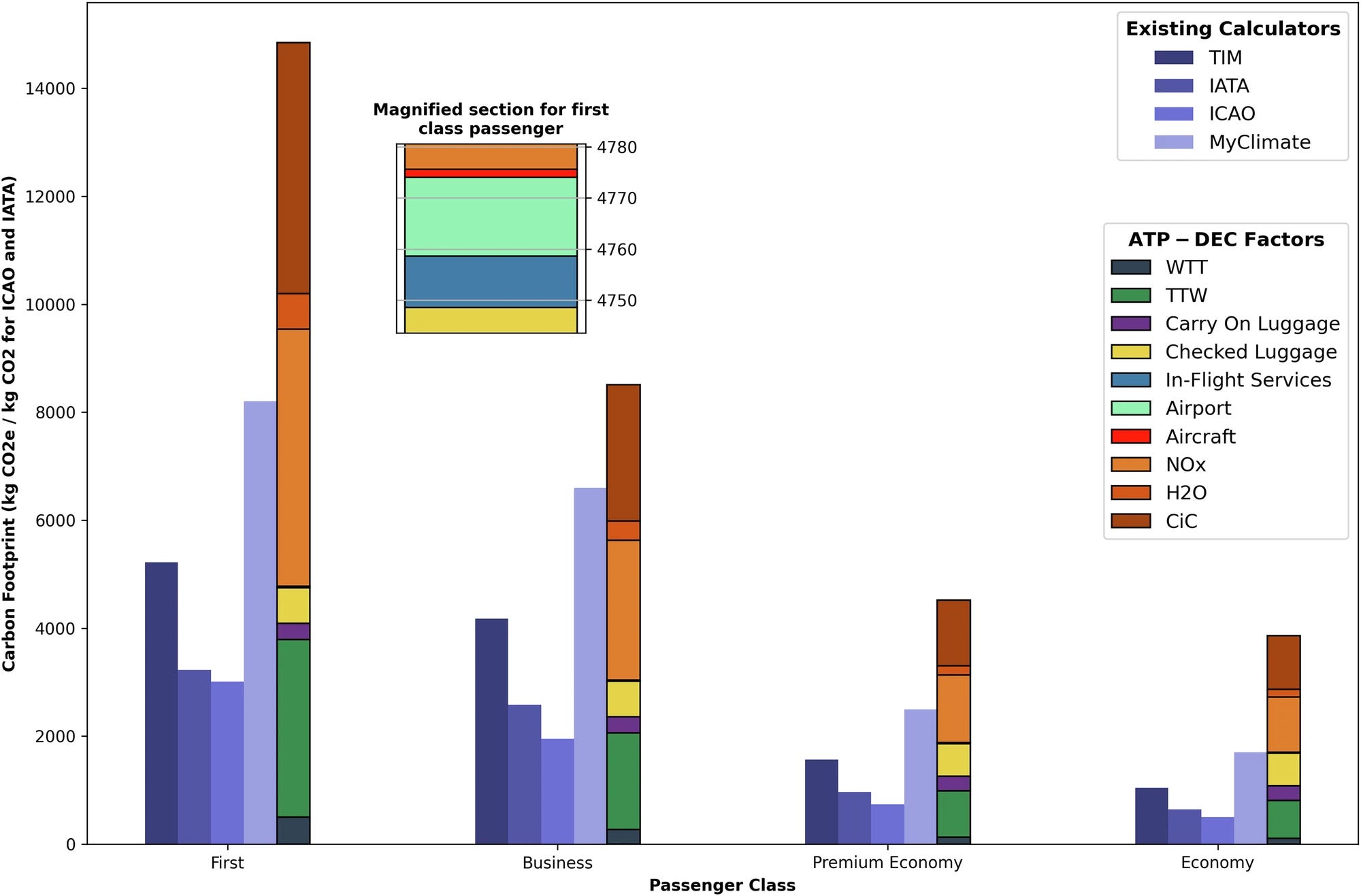
The MyClimate tool offers a meaningful estimate of emissions. But even the MyClimate model underestimates the actual impact of the emissions on global warming.
Avoid cruise ships
As a side note, it may be unexpected, but going on a cruise ship is not a good strategy to reduce emissions.
Cruise ships cause significant greenhouse gas emissions as well as other air pollution from burning heavy fuels. A typical passenger on a cruise ship may cause 0.3 to 0.5 tons of CO2e per day throughout the duration of the cruise. So a five day cruise may amount to significantly more emissions than simply flying to a Caribbean Island and staying for five days. This is even more significant if you fly to get to the starting point for the cruise in addition to the emissions caused by the cruise ship. Cruise ships are designed as a floating resort, and they have much higher emissions profiles than cargo ships designed to optimize the transport of cargo by the pound.
Step back and evaluate if your air travel is required. If you fly multiple times a year, flying less is a meaningful shift in behavior to reduce your emissions. Just like changing your diet requires a shift in how you approach grocery shopping and choosing a restaraunt, changing your travel patterns takes a shift in how you approach your travel plans. And if you find yourself flying, maybe to attend your best friend’s wedding, it does not mean you failed. Continuing to “fly less”, questioning each trip, and striving to find local destinations for leisure travel is an ongoing discipline.
If you already take this approach, will you share a trip you avoided in the comments? Or share how you now enjoy and value your current approach to traveling.
Jim
PS: if you want a bit more info…
Who is flying in the United States?
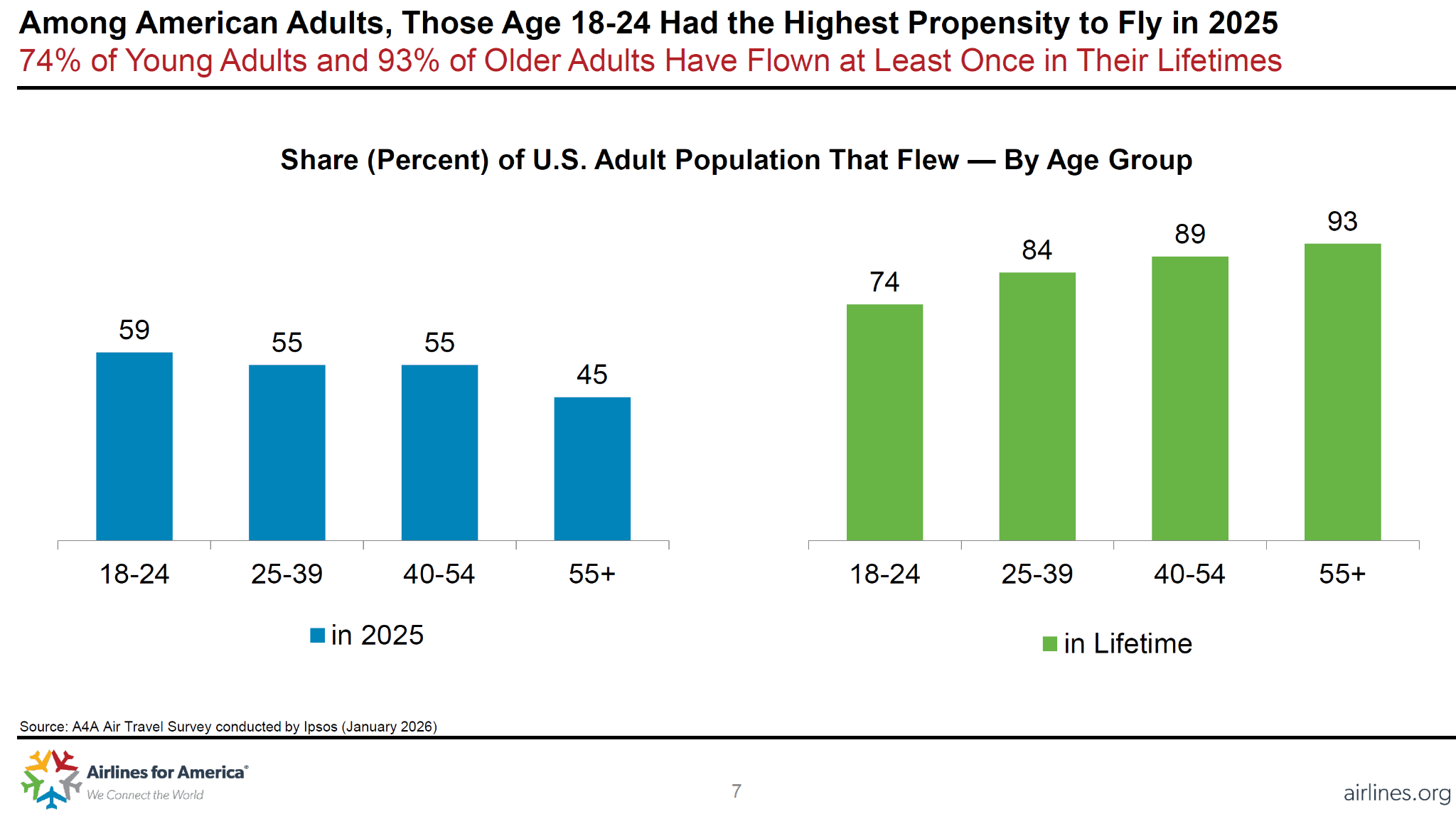
A trade association representing the leading US airlines, Airlines for America or A4A, partnered with the polling firm Ipsos to survey 3,847 American adults and develop statistics if the respondents had flown in 2025 and over their entire lifetime. The results of their Air Travelers in America: Annual Survey show that about half of Americans flew last year, and that a higher percentage of younger adults flew than older adults:
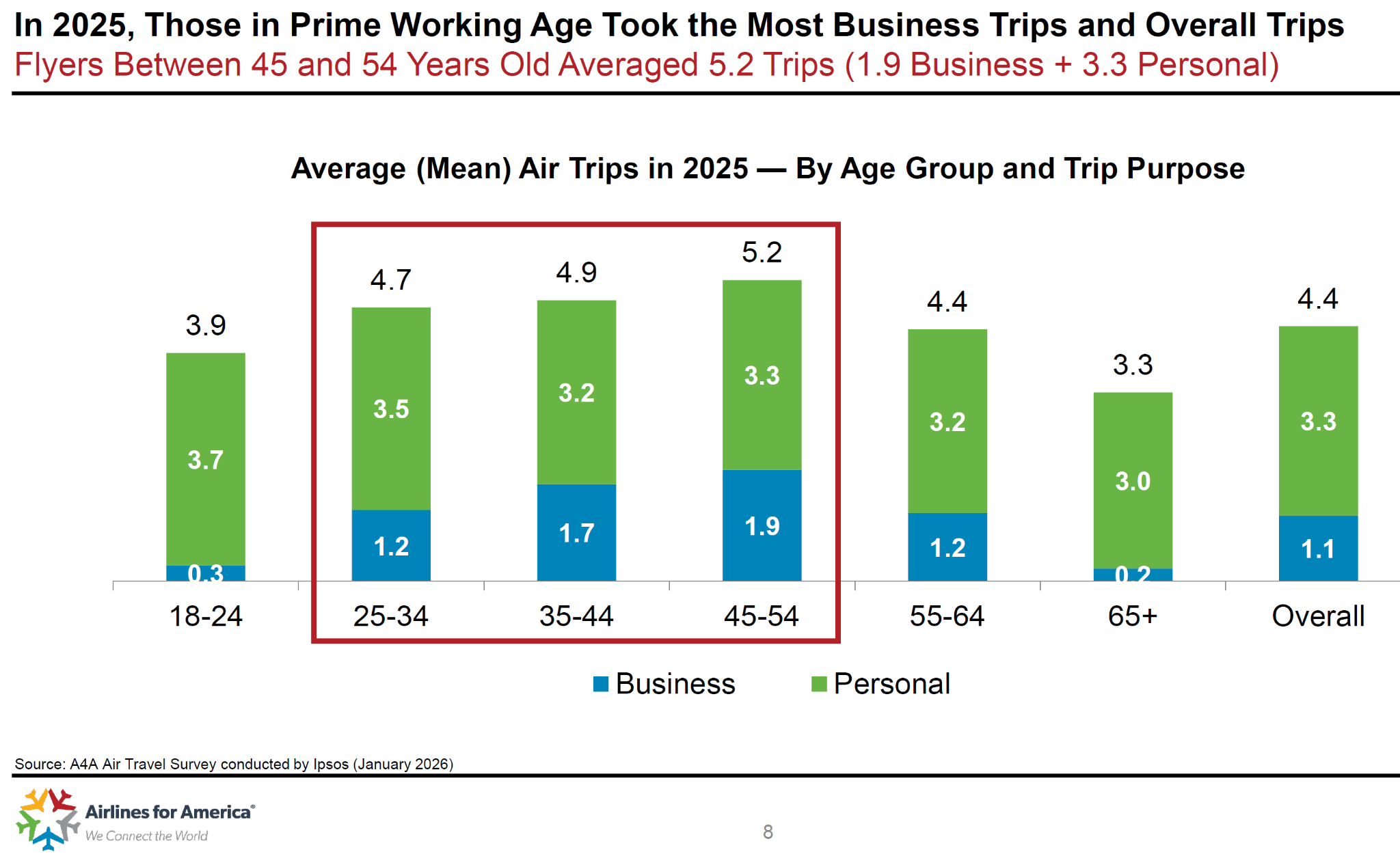
Also, Americans in prime working ages took the most business trips and overall trips, and people over the age of 65 continued to take personal flights:
These statistics are significantly different on a global scale, where over 80% of the world has never taken an airplane flight - a fact that Boeing’s CEO suggests is a “big growth engine” that Boeing as a corporation is trying to exploit (with significant consequences if they achieve create this “big growth” in airline sales.)
I’ve found a lot of folks in my age bracket and older feel entitled to their over seas trips, reasoning that they’ve worked hard and looked forward to this in retirement. I get that. I also get that they have grandchildren. People also have a fear of missing out which drives them, along with a keeping-up-with-the jones’ attitude. You’re consider un-cool or worse if traveling abroad isn’t on your to-do list. Lack of humility in our species underlies the climate crisis. Maybe not a helpful comment, but I’ll end with sharing a new book out this week by Dr. Katherine Wilkinson, titled Climate Wayfinding. A woman with a proven track record of getting folks off the side-lines and working on climate solutions.
Less air travel is an easy choice for me. At 6’7” tall, flying is uncomfortable in the increasingly limited seating space, especially for long duration flights. In addition, I have no need to fly anywhere other than the very occasional distant vacation locale. I’ve learned to enjoy staycations more and tend toward enjoying opportunities more local during needed time off from work.
Andrea and I are taking fewer car trips than we used to, and combine errands into those fewer trips. I bought a scooter a while ago that gets around 100 mpg and use that for my commute to work and for other nearby places.
Travel is a big contributor to climate change, but it’s one area that, for many of us, lends itself well for adopting new patterns for getting around.